Your Best Playing NeverShows Up On The Gig
It's not your chops. You were trained for the practice room, not the bandstand. Here's how to fix that.
Whatever They Call, You Own It.
$99$37 today
The Gig Starts. You Start Protecting.
You've earned your years behind the kit.
You've shed. Studied.
Taken lessons. Watched the videos.
You've practiced until the groove felt solid.
In the practice room, you know you can play.
Then the band leader
counts it off.
- They call the style you hoped they'd skip. Your stomach drops before your sticks even move.
- They point to you for a solo. Your mind goes blank. You freeze and search for the safest way back.
- The band starts to wobble. You grip harder. Your time slips coming out of the fill.
- You reach for something fresh. The same safe groove comes out again. Everything you practiced stays out of reach.
- The notes are right. But the feel is square. Stiff. More drum machine than musician.
- A player you admire looks over. You leave the music and start watching yourself play.
- You watch the footage later. Tight shoulders. Small playing. A gig you survived instead of owned.
Nobody said anything.
That almost makes it worse.
Because the drummer on that throne wasn't the drummer you know is in you.
And you wonder if the band felt it too. If they'll call again.
After all these years, this was supposed to feel easier by now.
This isn't happening because you lack talent.
And it isn't
happening because you didn't put in the work.
More Chops Won't Fix This
You've spent years treating this like a technique problem.
So you
did what serious drummers do.
You worked harder.
More rudiments. More patterns. More lessons.
More videos. More
hours alone behind the kit.
And your hands got better.
But that same drop still hits when they
call the style you hoped to avoid.
If chops were the missing piece, better hands would have fixed it.
They didn't.
Not because technique is useless.
Because technique was never the
real test.
Most drum teaching gives you blocks.
A pattern. A sticking. A lick.
You learn them when nothing is at stake.
Then the gig asks you to
find the right one instantly.
Shape it for the song.
Hold the tempo through the adrenaline.
Make
it feel good with real musicians listening.
That's a completely different skill.
And almost nobody teaches
it.
The missing piece is real-world preparation.
Vocabulary across the styles that actually get called.
Time that
doesn't move when the band does.
Feel that stays alive under
pressure.
The confidence to stop thinking, "Can I hold this together?"
And
start asking, "What does this song need?"
You're not behind.
You didn't waste those years.
You were given the pieces, but never shown how to make them hold up on the bandstand.
Once you prepare for the gig itself, you don't need to protect yourself from it.
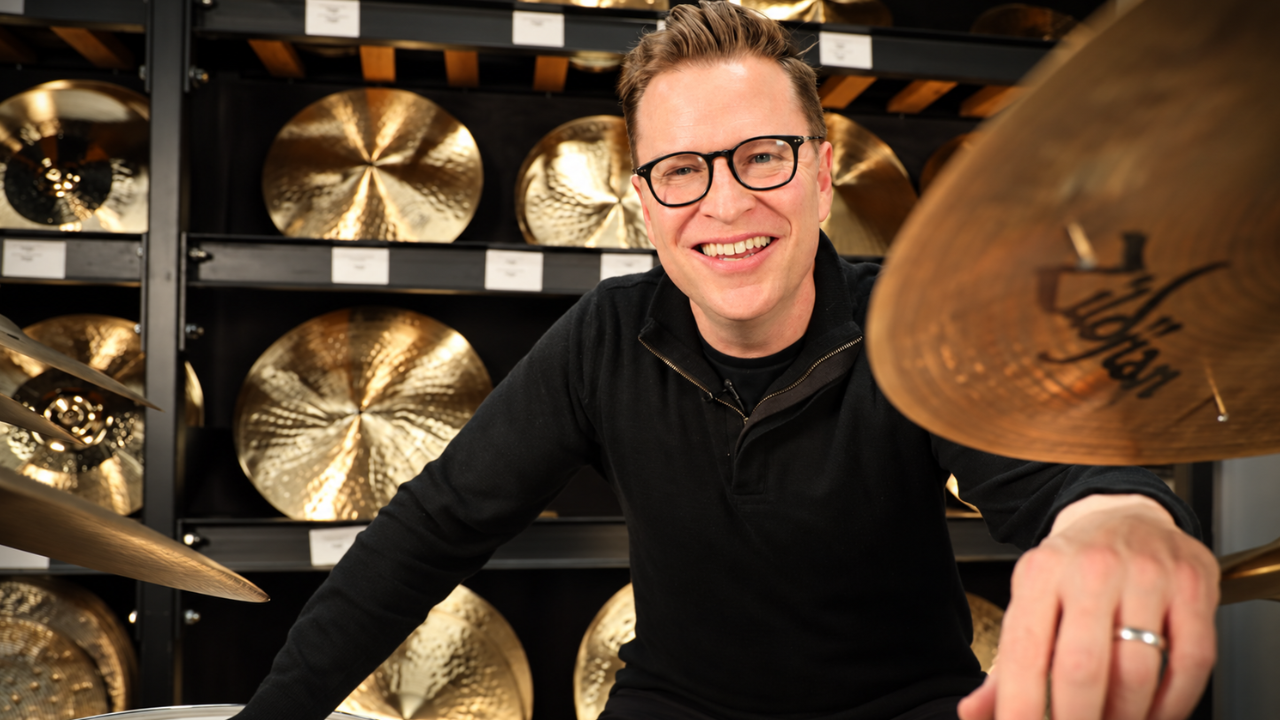
I know, because 30 years of real gigs taught me exactly what holds up and what falls apart.
I Know What Gets A Drummer Called Back
For more than 30 years, I've played where drumming gets tested for real.
Festivals and clubs. Sessions and studios.
Parades, second lines,
funerals, and weddings.
Famous stages, and rooms nobody will ever
hear about.
As a member of Galactic, with deep roots in New Orleans drumming, I learned something no practice room can teach you:
Other musicians know within a few bars whether they can relax with you.
They feel it when your time moves.
They feel it when the groove
sits too square.
They feel it when you're holding back because you
don't trust what comes next.
And they feel it right away when the drummer behind the kit truly owns it.
I know, because I've felt both sides.
I've felt myself tighten. I've managed my way through moments I should have owned.
And I've felt the whole band change when the pocket locks and everyone knows they're safe.
In every room, I saw the same thing.
The drummers who get called back are rarely the flashiest.
They're
not always the fastest.
They're the ones whose time settles the band.
Whose feel makes every musician play better.
Who hear what the song
needs and reach for the right vocabulary without fear.
That's the drummer other musicians love playing with.
That's the
drummer they remember when the next gig comes up.
So I took the grooves, the feel, and the real-world preparation from 30 years of gigs and put it all into one complete system:
The Gig-Ready Drummer: The Pro Player Formula.
Stop Hoping They Don't Call It
30 years of real gigs in one system. Walk into your next count-off ready.
$99$37 today
This Trains What The Gig Actually Tests
You don't need another groove that disappears the moment the room fills with musicians. You need to train the exact moment it usually disappears.
The count-off. The adrenaline.
The band pulling against the time.
The fill that has to land.
The style you can't fake.
That's the difference.
This isn't a tips video.
It isn't a pack of random patterns.
It
isn't more content you understand today and lose on the next gig.
It's a real-world system that builds five things you can reach for when the pressure is real.
- Real-world vocabulary. When they call the style you dread, you stop reaching for the same safe groove.
- Time that holds. Stay in the center when adrenaline rises, the band drifts, or a fill tries to pull you away.
- Automatic transitions. Move where the song needs you, without freezing or getting stuck in place.
- Dynamic control. Stay relaxed and musical when pressure tempts you to play too loud, disappear, or tighten up.
- Earned confidence. Stop wondering if you'll survive what they call. Sit down knowing you're ready for it.
Playing the right notes isn't enough.
You have to play the notes
right.
When it counts.
What They Call When It Counts
This is where hoping ends.
Every groove below has a way of exposing your time, touch, or feel in front of a band.
The Five That Make Drummers Tighten
- The Shuffle. Three small nuances decide if it truly swings or just sounds counted.
- Slow Blues 12/8. Every rush, every drag, every nervous note has nowhere to hide.
- Ballad With Brushes. The touch that either makes you shake on the throne or lets the whole band breathe.
- New Orleans Second Line. Traditional syncopated and straight two-feel. The style musicians ask me about most.
- Bossa Nova. Soft, exposed, and unforgiving when your time and feel aren't settled.
The Funk Grooves Everyone Knows
- Cold Sweat. The grace-note control that makes Clyde Stubblefield's beat snap instead of smear.
- Soul Power. The deep placement and restraint behind Jabo Starks' unmistakable pocket.
- Funky Drummer. The Clyde Stubblefield groove everyone knows and few can make sit right.
- Crazy Strut. The greasy, natural New Orleans feel Zigaboo Modeliste brought to The Meters.
The Styles That Make You Versatile
- Half-Time Shuffle. Hold the space without tightening, rushing, or letting the feel collapse.
- Train Beat. Relentless drive, without letting the tempo run away from you.
- One-Handed 16th Note Funk, 3 Ways. The practical shortcuts working drummers rely on.
- New Orleans Mambo, Mozambique, Waltzes, and Syncopated Funk. The range to walk into any musical room prepared.
- Putting It Between The Cracks. The feel that separates stiff, correct drumming from deep, soulful playing.
How You Make It Yours
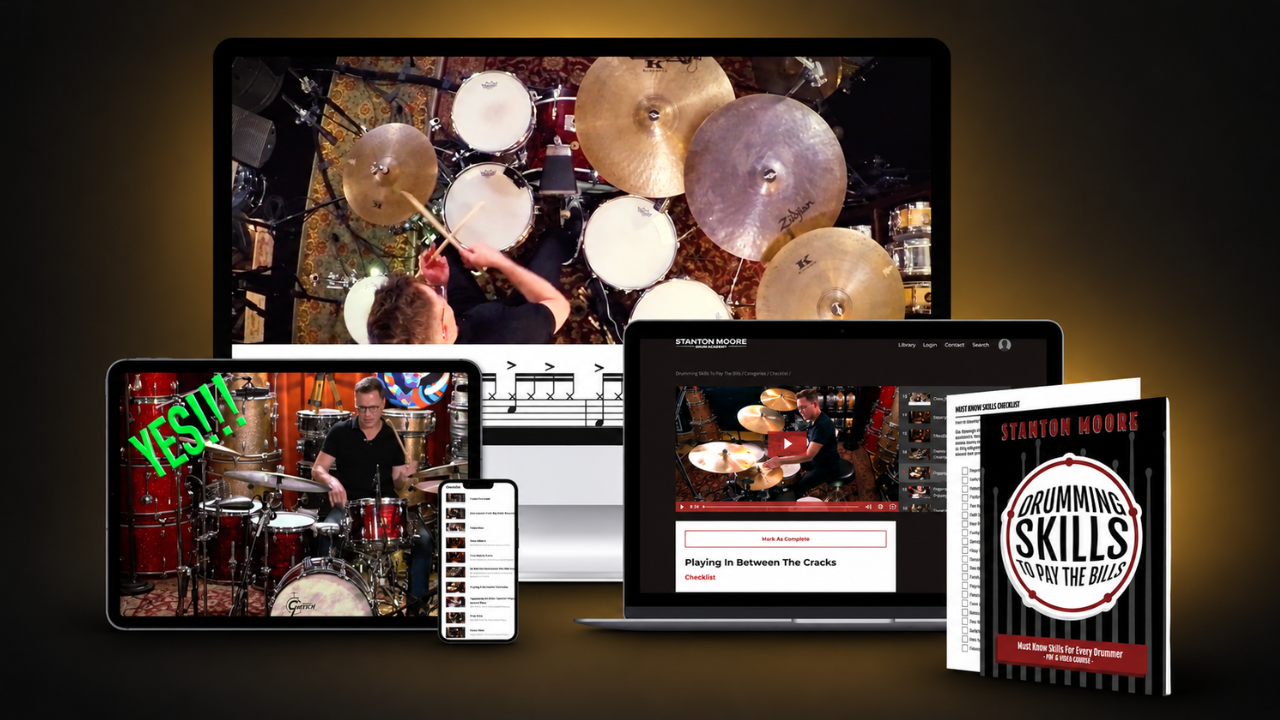
- The 131-Page Book. Every groove written out, explained, and broken down for a quick look before a gig.
- Video For Every Lesson. I play each groove and show you why it feels right, not just how to count it.
- Curated Listening Playlists. Soak in every style while you drive, cook, or work out, even when kit time is short.
- The Gig-Ready Checklist. 27 grooves. One clear roadmap. Know exactly where you stand.
- Lifetime Updates. Every lesson I add or improve becomes part of your system.
Now imagine the band leader calls one of those styles tonight.
Which one makes your stomach drop?
Which one sends you back to
the same safe groove?
Which one could you truly own?
Not recognize.
Not get through.
Own.
If you hesitated on even one, you just found the gap this system was built to close.
They Stopped Hoping. They Started Owning.
"The shuffle section alone changed my playing. I thought I could play a shuffle. I could not play a shuffle, not the way Stanton breaks it down. The three nuances he teaches are the difference between playing the notes and making it feel right. My band noticed within a week."
Michael S.
"I used to dread brush ballads. Genuinely dread them. I'd hope they wouldn't come up. Now I lean into them. The video breakdown plus the listening playlist did something two years of practicing alone never did."
Nikos A.
"I've been playing 20 years and still felt like something was missing. This checklist showed me exactly what it was. I went through it groove by groove and for the first time I can walk into any gig and actually know where I stand."
Shilo S.
"I've bought courses before and never finished them. This one's different because it's not something you study, it's something you use. I pulled it up before a gig last month where I knew they'd call a second line. I went in prepared."
Adam T.
Another Year Costs More Than $37
One private drum lesson can cost more than this entire system.
And
when that hour ends, you're left hoping you remember it next week.
This is the reference you come back to before rehearsals, jams, and gigs for the rest of your playing life.
The Gig-Ready Checklist shows you exactly what you own and what could still expose you.
Lifetime updates keep it growing.
The regular price is $99.
Today,
it's $37.
The real question isn't whether this is worth $37.
It's what
another year of protecting will cost you.
Another style you hope they don't call.
Another solo you
survive.
Another piece of footage you can't watch twice.
Another
drive home wondering why it still feels this hard.
Close The Gap Before The Next Count-Off
Turn the styles you avoid into grooves you own when everyone is listening.
$99$37 today
This Was Built For The Gap You Still Feel
This Is For You If:
- You have years behind the kit, but the gig still exposes you. You know too much to feel this unsure at the count-off.
- You play where other musicians depend on you. Gigs, jams, rehearsals, church, or the sub call you want to say yes to.
- You can play it alone, but don't trust it in the room. What felt "in the bag" fades when the pressure hits.
- You quietly hope certain styles never get called. You're tired of that drop deciding what you play.
- You want to be more than the drummer who gets through the song. You want the band to relax, smile, and call again.
- You're coming back after years away. You don't want to start from zero. You want your time, feel, and place on the bandstand back.
This Is Not For You If:
- You only want faster hands or flashy licks for social media. This is about becoming the drummer real musicians trust.
- You already own every style on this page under pressure. If the band could call any of them tonight and your stomach wouldn't move, you may not need this.
Imagine This Version Of The Count-Off
Same room. Same musicians. Same pressure.
But this time, you're not
protecting yourself from what might happen.
They call the style you used to dread. No drop. You know where the feel belongs.
The band pushes against the tempo. Your time holds. You stop chasing and become the center.
You come out of a fill. The pocket is right where you left it.
They point to you for a solo. You lean in, stay with the form, and play instead of looking for the exit.
You reach for something fresh. The vocabulary is there when you need it.
A musician you admire looks over. You stay inside the music and give the song what it needs.
You watch the footage later. Loose shoulders. A calm face. The drummer from the practice room finally showed up on the gig.
Within two bars, the room changes.
The musicians around you
relax.
Someone smiles.
Not because you played something flashy.
Because the pocket feels
good.
Because the band can trust what's behind them.
You're not trying to prove you belong anymore.
You're listening.
Responding. Playing.
That's the drummer other musicians love playing with.
The
drummer they call back.
Test It On A Real Gig For 30 Days
Go through the system.
Take it to your next rehearsal or gig.
Then judge it in the only moment that matters: when they call the style, raise the sticks, and count it off.
Your purchase is backed by my 30-day money-back guarantee.
If the count-off doesn't feel different, you get your money back.
I built this from 30 years of what holds up on a real bandstand, and I stand behind it.
Stop Protecting. Start Playing.
Take it to your next gig. You have 30 days to decide if the count-off feels different.
$99$37 today
Still Have A Question?
I've played for years. Is this too basic?
It's not about how long you've played. It's about what happens when the band calls the groove. If every style on this page feels solid live, skip this. If even two made your stomach move, it's not too basic.
What if I barely have time to practice?
You don't need to wander through endless modules. Open the checklist. Pick the groove most likely to expose you next. Work it. Check it off. The playlists build the feel while you drive, cook, or work out.
Am I too old to come back?
No. You're not behind, and you're not starting empty. The years you've played are still in you. This gets them ready for the bandstand again.
I'm not a pro. Is this too advanced?
Gig-ready is where you're going, not something you need to be before you start. I play every lesson on video and break it down in the 131-page book. You're never left guessing what makes a groove feel right.
Will this become another course I never finish?
You don't have to finish it for it to be useful. Got a gig coming up? Open the groove, watch it, listen to it, and take it to the bandstand.
I only play one style. Why learn the rest?
Every new style sharpens your time, touch, and feel in the music you already play. And jams, weddings, and sub calls don't always stay in your safest lane.
Do I need to read music?
The 131-page book has every groove written out and explained. Every lesson also has video, where I play it and show you what makes it feel right.
I have your other courses. Is this different?
This system is built around the must-know styles working drummers get called to play. The book, videos, playlists, and Gig-Ready Checklist work together as one foundation for the gig.
What if it's not for me?
You're covered by my 30-day money-back guarantee. Take it to a real rehearsal or gig and judge it where the pressure is real.
How do I get access?
You get instant access as soon as you complete the secure checkout.
What do lifetime updates mean?
Anything I add or improve becomes part of your system, at no extra cost.
How Many More Gigs Will You Just Survive?
One year from now, you're either still protecting, or you're the drummer they call back.
$99$37 today